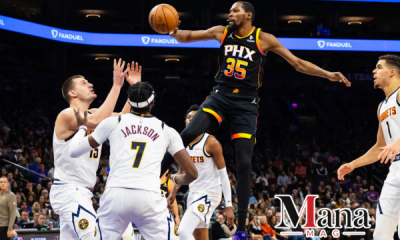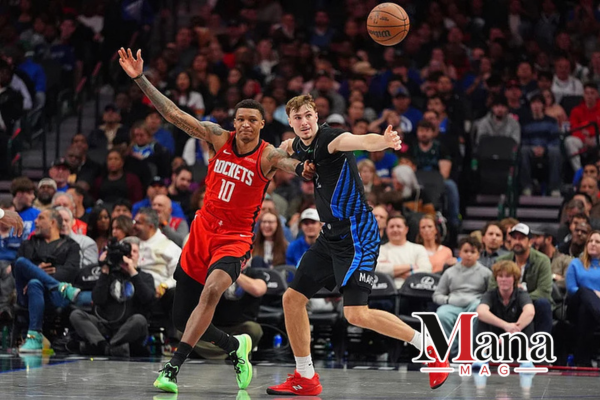
The Dallas Mavericks beat the Houston Rockets 122-109 on December 6, 2025, at American Airlines Center in Dallas. Anthony Davis led all scorers with 29 points and added eight rebounds, while Kevin Durant led Houston with 27 points. The game was tied at halftime, but Dallas produced a 37-point third quarter and turned the matchup into a 13-point victory.
For anyone searching for Dallas Mavericks vs Houston Rockets match player stats, the box score shows a game decided by shooting efficiency, turnovers, defensive pressure and one huge third quarter. Houston actually won the rebounding battle, but Dallas made 49 of 82 field-goal attempts and forced 20 Houston turnovers. The Mavericks also recorded 13 steals and scored 26 fast-break points.
This article breaks down the main player numbers, team statistics, quarter-by-quarter scoring and the individual performances that shaped the result.
Dallas Mavericks vs Houston Rockets Final Score
| Team | Q1 | Q2 | Q3 | Q4 | Final |
| Houston Rockets | 26 | 31 | 20 | 32 | 109 |
| Dallas Mavericks | 29 | 28 | 37 | 28 | 122 |
Dallas led 29-26 after the first quarter. Houston responded in the second and scored 31 points to pull level at halftime.
The third quarter changed everything.
Dallas scored 37 points while limiting Houston to 20. The Mavericks closed the period on a 29-9 run and entered the fourth quarter with a 96-77 advantage. Houston won the fourth quarter 32-28, but the deficit was already too large to overcome.
Top Player Stats From the Match
| Player | Team | Points | Rebounds | Assists |
| Anthony Davis | Dallas Mavericks | 29 | 8 | 2 |
| Kevin Durant | Houston Rockets | 27 | 5 | 3 |
| Jabari Smith Jr. | Houston Rockets | 22 | 8 | 3 |
| Brandon Williams | Dallas Mavericks | 20 | 1 | 5 |
| Cooper Flagg | Dallas Mavericks | 19 | 5 | 3 |
| Aaron Holiday | Houston Rockets | 19 | 2 | 2 |
| Naji Marshall | Dallas Mavericks | 15 | 2 | 2 |
| P.J. Washington | Dallas Mavericks | 14 | 7 | 1 |
| Ryan Nembhard | Dallas Mavericks | 11 | 1 | 7 |
Anthony Davis delivered the strongest overall scoring performance. He made 14 of 19 shots and finished with 29 points and eight rebounds.
Durant had 27 points and was Houston’s leading scorer. Jabari Smith Jr. added 22 points and eight rebounds, while Aaron Holiday contributed 19 points.
Dallas also received strong production beyond Davis. Brandon Williams scored 20 points off the bench, Cooper Flagg posted 19 points, and Ryan Nembhard handed out seven assists.
Anthony Davis Led Dallas With Efficient Scoring
Davis’ 29-point performance
Anthony Davis finished with 29 points, eight rebounds, two assists, two steals and one block.
The most impressive part of his stat line was his shooting. Davis made 14 of 19 field-goal attempts, giving him a 73.7% field-goal percentage.
He also made one of two free throws.
Davis was especially effective after halftime. He made six of seven shots during the third quarter as Dallas pulled away from Houston. The Mavericks shot 16 of 22 from the field during that quarter, or 72.7%.
Why Davis mattered so much
Davis had scored only two points against Oklahoma City the previous night. He responded against Houston with a game-high 29 points.
That turnaround mattered because Dallas needed a reliable interior scorer against a Houston defense that had played well during the first half.
Davis gave Dallas efficient scoring without needing a huge number of attempts. His 14 made field goals were the most by any player in the game.
Kevin Durant Led the Houston Rockets
Kevin Durant finished with 27 points, five rebounds, three assists and three blocks.
His first half was particularly strong. Durant scored 20 points before halftime and helped Houston stay level with Dallas after two quarters.
He made 11 of 20 field-goal attempts overall, including two of six three-pointers. He also made three of four free throws.
Durant did not score in the fourth quarter after Dallas had opened a large lead during the third. His early scoring kept Houston in the contest, but the Rockets could not match Dallas’ third-quarter production.
Jabari Smith Jr. Added 22 Points
Jabari Smith Jr. was Houston’s second-leading scorer with 22 points.
He shot 10 of 19 from the field and made two of seven three-point attempts. Smith also grabbed eight rebounds and recorded three assists.
His eight rebounds tied for the highest total on Houston’s roster.
Smith remained productive after halftime, but Houston’s overall offensive efficiency fell behind Dallas during the third quarter.
Brandon Williams Provided a Major Bench Contribution
Brandon Williams scored 20 points for Dallas despite coming off the bench.
He shot 8 of 12 from the field and made one of two three-point attempts. Williams also recorded five assists and two steals.
His 20 points gave Dallas another reliable scoring option beyond Davis.
Bench scoring often becomes important when a game stretches across four quarters. In this matchup, Williams helped Dallas maintain offensive production while Houston tried to respond to the third-quarter surge. The official game coverage lists his final line at 20 points and five assists.
Cooper Flagg Produced a Well-Rounded Stat Line
Cooper Flagg finished with 19 points, five rebounds, three assists, two steals and two blocks.
He shot 7 of 15 from the field and made one of two three-point attempts. He also converted all four of his free throws.
Flagg’s contribution extended beyond scoring. His five rebounds, three assists, two steals and two blocks gave Dallas production across several statistical categories.
His transition play was also noticeable during Dallas’ strong second half.
Ryan Nembhard Led Dallas in Assists
Ryan Nembhard finished with 11 points and seven assists.
His seven assists were the highest total by any Dallas player. He shot 5 of 7 from the field and made his only three-point attempt.
Nembhard’s role was important because Dallas did not depend entirely on Davis to create offense. His passing helped create opportunities for Davis, Flagg, Marshall and other Mavericks scorers.
Dallas finished with 22 assists as a team, matching Houston’s total. The difference came from what happened after those possessions. Dallas converted a much higher percentage of its shots.
P.J. Washington Made an Impact on Defense
P.J. Washington scored 14 points and grabbed seven rebounds.
His biggest statistical contribution came on defense. Washington recorded five steals, the highest total by any player in the game.
He also shot 6 of 13 from the field and made two three-pointers.
Washington returned after missing four games because of a right ankle injury. His defensive activity gave Dallas another way to disrupt Houston’s offense.
Aaron Holiday Scored 19 for Houston
Aaron Holiday produced 19 points in 13 minutes.
He made seven of 12 field-goal attempts, three of six three-point attempts and both of his free throws.
His 19 points were especially efficient considering his limited playing time.
Holiday gave Houston an important scoring contribution from the bench, but the Rockets needed more sustained production after Dallas took control in the third quarter.
Dallas Mavericks Player Stats
| Player | MIN | FG | 3PT | FT | REB | AST | STL | BLK | TO | PTS |
| Anthony Davis | 30 | 14-19 | 0-1 | 1-2 | 8 | 2 | 2 | 1 | 0 | 29 |
| P.J. Washington | 36 | 6-13 | 2-7 | 0-0 | 7 | 1 | 5 | 1 | 2 | 14 |
| Naji Marshall | 28 | 6-8 | 1-3 | 2-2 | 2 | 2 | 1 | 0 | 1 | 15 |
| Cooper Flagg | 36 | 7-15 | 1-2 | 4-4 | 5 | 3 | 2 | 2 | 0 | 19 |
| Ryan Nembhard | 23 | 5-7 | 1-1 | 0-0 | 1 | 7 | 1 | 0 | 2 | 11 |
| Brandon Williams | 23 | 8-12 | 1-2 | 3-5 | 1 | 5 | 2 | 0 | 0 | 20 |
| Caleb Martin | 2 | 0-0 | 0-0 | 0-0 | 0 | 0 | 0 | 0 | 0 | 0 |
| Moussa Cisse | 2 | 0-0 | 0-0 | 0-0 | 1 | 0 | 0 | 0 | 0 | 0 |
| Aaron Holiday | 13 | 1-3 | 0-1 | 2-2 | 1 | 2 | 0 | 0 | 3 | 4 |
| Max Christie | 23 | 1-2 | 1-1 | 3-3 | 2 | 0 | 0 | 0 | 2 | 6 |
| Jaden Hardy | 7 | 0-2 | 0-1 | 0-0 | 0 | 0 | 0 | 0 | 0 | 0 |
The Mavericks received scoring from several areas. Davis led the way, but Williams, Flagg, Marshall and Washington also made important contributions.
Dallas also had strong defensive numbers, particularly from Washington and Flagg.
Houston Rockets Player Stats
| Player | MIN | FG | 3PT | FT | REB | AST | STL | BLK | TO | PTS |
| Kevin Durant | 43 | 11-20 | 2-5 | 3-4 | 5 | 3 | 0 | 3 | 2 | 27 |
| Jabari Smith Jr. | 41 | 10-19 | 2-7 | 0-0 | 8 | 3 | 1 | 1 | 1 | 22 |
| Clint Capela | 30 | 5-10 | 0-0 | 0-1 | 8 | 1 | 0 | 2 | 2 | 10 |
| Josh Okogie | 27 | 3-5 | 1-3 | 2-2 | 6 | 0 | 2 | 1 | 2 | 9 |
| Amen Thompson | 32 | 3-14 | 0-3 | 5-6 | 8 | 7 | 3 | 2 | 6 | 11 |
| Aaron Holiday | 13 | 7-12 | 3-6 | 2-2 | 2 | 2 | 1 | 0 | 0 | 19 |
| Reed Sheppard | 18 | 2-7 | 1-4 | 0-0 | 2 | 2 | 1 | 0 | 0 | 5 |
| Jae’Sean Tate | 7 | 1-1 | 0-0 | 0-0 | 1 | 0 | 0 | 0 | 0 | 2 |
| JD Davison | 2 | 0-0 | 0-0 | 0-0 | 0 | 1 | 0 | 0 | 0 | 0 |
| Isaiah Crawford | 2 | 0-1 | 0-1 | 0-0 | 0 | 0 | 0 | 0 | 0 | 0 |
Houston had three players score at least 19 points. Durant led with 27, Smith had 22 and Holiday scored 19.
Amen Thompson also contributed seven assists, eight rebounds and three steals, but his six turnovers hurt Houston’s possession efficiency.
Team Shooting Comparison
| Category | Houston Rockets | Dallas Mavericks |
| Field goals | 44-87 | 49-82 |
| Field-goal percentage | 50.6% | 59.8% |
| Three-pointers | 10-29 | 7-19 |
| Three-point percentage | 34.5% | 36.8% |
| Free throws | 11-13 | 17-20 |
| Free-throw percentage | 84.6% | 85.0% |
The shooting numbers explain a large part of the result.
Houston actually shot 50.6% from the field, which is a strong percentage. Dallas was simply better at 59.8%.
The Mavericks made five more field goals despite taking five fewer attempts.
Dallas also shot slightly better from three-point range, but three-point shooting was not the main reason for the win. The larger gap came from overall field-goal efficiency.
Rebounding Comparison
| Rebounding Category | Houston Rockets | Dallas Mavericks |
| Total rebounds | 45 | 37 |
| Offensive rebounds | 16 | 7 |
| Defensive rebounds | 21 | 24 |
| Team rebounds | 8 | 6 |
Houston won the rebounding battle 45-37.
The Rockets also had a clear advantage on the offensive glass, collecting 16 offensive rebounds compared with seven for Dallas.
That makes the final result more interesting. Dallas did not win because it dominated every area of the box score.
Houston generated more second-chance opportunities. Dallas won because it converted its overall possessions more efficiently and forced Houston into more turnovers.
Turnovers and Defensive Pressure
| Category | Houston Rockets | Dallas Mavericks |
| Turnovers | 20 | 12 |
| Steals | 8 | 13 |
| Blocks | 6 | 4 |
This was one of the clearest differences between the teams.
Houston turned the ball over 20 times. Dallas committed only 12.
The Mavericks also recorded 13 steals, five more than Houston.
That combination created additional possessions for Dallas while limiting Houston’s chances to build offensive rhythm.
Dallas converted defensive pressure into transition scoring and finished with 26 fast-break points.
The Third Quarter Decided the Game
Houston and Dallas were tied at halftime
The first half was close.
Dallas led 29-26 after the first quarter. Houston answered with a 31-28 second quarter, leaving both teams tied at 57 at halftime.
The Rockets had plenty of offense from Durant, who scored 20 points before the break.
Then the game changed.
Dallas exploded after halftime
The Mavericks scored 37 points in the third quarter.
Houston managed only 20.
That 17-point difference gave Dallas the separation it needed.
Davis made six of seven shots during the period, while Dallas shot 16 of 22 overall. The Mavericks also finished the quarter on a 29-9 run.
Houston won the fourth quarter
Houston did not stop competing.
The Rockets scored 32 points in the fourth quarter compared with Dallas’ 28.
The problem was the 19-point deficit they faced entering the period.
Dallas had already created enough distance to protect the lead.
Dallas Turned Defense Into Fast-Break Points
Dallas recorded 13 steals and scored 26 fast-break points.
Those numbers fit together.
The Mavericks repeatedly used defensive pressure to create transition opportunities. A steal often turned into a quick scoring chance before Houston could establish its half-court defense.
Dallas also scored 74 points in the paint compared with Houston’s 58.
That interior advantage worked alongside the team’s strong shooting percentage. The Mavericks did not need to rely on a high volume of three-point attempts to reach 122 points.
Houston’s Rebounding Edge Was Not Enough
Houston’s 45-37 rebounding advantage looks important at first glance.
The Rockets collected 16 offensive rebounds, giving them additional possessions.
Yet Dallas still won comfortably.
The reason was efficiency.
Houston shot 50.6% from the field, while Dallas shot 59.8%. Houston also committed eight more turnovers.
Those two factors offset the Rockets’ rebounding advantage.
This matchup is a useful example of why one box-score category rarely tells the whole story.
Alperen Sengun’s Absence
Alperen Sengun did not play because of illness.
His absence was particularly relevant because Houston faced Dallas with Anthony Davis leading the Mavericks’ interior attack.
Sengun is also an important offensive creator for Houston, so the Rockets had to distribute more responsibility among Durant, Smith, Thompson and other players.
Houston still scored 109 points, but the team had difficulty matching Dallas’ efficiency after halftime. The Rockets were also playing the second game of a back-to-back.
What the Player Stats Tell Us
Dallas had more efficient star scoring
Davis scored 29 points on 14-of-19 shooting.
Durant scored 27 on 11-of-20 shooting.
Both players had strong scoring nights, but Davis converted a higher percentage of his attempts and became especially effective during Dallas’ third-quarter surge.
Dallas received strong secondary scoring
The Mavericks had four players score at least 19 points.
Davis had 29.
Williams had 20.
Flagg had 19.
Marshall had 15.
Houston had three players reach at least 19 points, led by Durant, Smith and Holiday.
The extra Dallas production helped keep the offense moving even when Houston focused defensive attention on Davis.
Defense created an offensive advantage
Washington recorded five steals.
Dallas had 13 steals as a team.
The Mavericks also committed only 12 turnovers.
That 13-steal, 12-turnover combination gave Dallas a much cleaner possession profile than Houston’s 20 turnovers.
Playmaking was evenly matched
Both teams finished with 22 assists.
That means passing volume itself did not separate the teams.
The difference came from shooting efficiency and turnovers.
Dallas turned its possessions into made shots at a much higher rate.
Dallas Mavericks vs Houston Rockets Key Numbers
Here are the main statistics from the matchup:
- Final score: Dallas 122, Houston 109.
- Anthony Davis: 29 points, eight rebounds, two assists.
- Kevin Durant: 27 points, five rebounds, three assists.
- Jabari Smith Jr.: 22 points, eight rebounds, three assists.
- Brandon Williams: 20 points, five assists.
- Cooper Flagg: 19 points, five rebounds, three assists, two steals and two blocks.
- Aaron Holiday: 19 points.
- P.J. Washington: 14 points, seven rebounds and five steals.
- Ryan Nembhard: 11 points and seven assists.
- Dallas shot 59.8% from the field.
- Houston shot 50.6% from the field.
- Dallas made seven three-pointers.
- Houston made 10 three-pointers.
- Dallas had 12 turnovers.
- Houston had 20 turnovers.
- Dallas recorded 13 steals.
- Houston recorded eight steals.
- Houston had 45 rebounds.
- Dallas had 37 rebounds.
- Both teams recorded 22 assists.
- Dallas scored 26 fast-break points.
- Dallas scored 74 points in the paint.
- Houston scored 58 points in the paint.
Why Dallas Won the Match
Dallas won because several advantages appeared at the same time.
The Mavericks shot nearly 60% from the field.
They protected the ball better.
They forced 20 Houston turnovers.
They recorded 13 steals.
They scored 26 fast-break points.
They received 20 points from Brandon Williams off the bench.
Most importantly, they dominated the third quarter 37-20.
Houston had strong numbers in several areas. The Rockets shot above 50% from the field and won the rebounding battle. Durant, Smith and Holiday also provided strong scoring.
But Dallas created too much separation in one quarter.
Why Houston Lost Despite Strong Shooting
Houston’s 50.6% field-goal percentage was good enough to win many games.
The Rockets also had a 45-37 rebounding advantage.
The problem was the turnover count.
Houston gave the ball away 20 times. Dallas had 12 turnovers.
That eight-turnover gap mattered because Dallas was already shooting at a higher rate. When a team combines better shooting with extra possessions created by turnovers, the opponent faces a difficult path back into the game.
The absence of Sengun also reduced Houston’s frontcourt options.
The Rockets still scored 109 points, but their offense could not keep pace with Dallas during the third quarter.
A Closer Look at the Fourth Quarter
Houston entered the fourth quarter down 19 points.
The Rockets responded by scoring 32 points.
Dallas scored 28.
That meant Houston reduced the margin by four points during the final period.
It was a strong response, but not enough.
Dallas had already done the main work in the third quarter. The Mavericks did not need to win the fourth. They needed to protect the lead.
That is exactly what happened.
What Stands Out From the Match Player Stats
The Dallas Mavericks vs Houston Rockets match player stats show that the winning team does not need to dominate every category.
Houston had more rebounds.
Houston made more three-pointers.
Houston shot above 50% from the field.
Yet Dallas won by 13.
The deciding numbers were Dallas’ 59.8% field-goal shooting, 13 steals and 12 turnovers against Houston’s 20. The 37-point third quarter then turned those statistical advantages into a comfortable lead.
Davis was the headline performer, but the win came from a broader team effort.
Williams provided 20 points from the bench.
Flagg contributed in several categories.
Washington supplied five steals.
Nembhard produced seven assists.
That combination gave Dallas enough production across the roster to take control after halftime.
Final Takeaway
The Dallas Mavericks defeated the Houston Rockets 122-109 after a close first half and a dominant third quarter.
Anthony Davis was the top performer with 29 points and eight rebounds. He shot 14 of 19 from the field and scored six of his seven third-quarter shots. Kevin Durant led Houston with 27 points, while Jabari Smith Jr. added 22.
The most important team statistic was Dallas’ 37-20 advantage in the third quarter. The Mavericks also shot 59.8% from the field and committed eight fewer turnovers than Houston.
Houston’s 45-37 rebounding advantage shows that the Rockets competed well in several areas. But Dallas generated more efficient offense and created more transition opportunities through defensive pressure.
For anyone checking the Houston Rockets vs Dallas Mavericks match player stats, the box score points to a simple answer. Davis led the scoring, but Dallas won through efficient shooting, defensive activity, ball security and a decisive third-quarter run.
FAQ
Who won the Dallas Mavericks vs Houston Rockets game?
The Dallas Mavericks defeated the Houston Rockets 122-109 on December 6, 2025, at American Airlines Center in Dallas.
Who was the top scorer in the Dallas vs Houston game?
Anthony Davis was the game’s leading scorer with 29 points. He also grabbed eight rebounds and recorded two assists.
How many points did Kevin Durant score against Dallas?
Kevin Durant scored 27 points for Houston. He also recorded five rebounds and three assists.
How many points did Anthony Davis score against the Rockets?
Anthony Davis scored 29 points and shot 14 of 19 from the field. He also recorded eight rebounds.
Who led the Mavericks in assists?
Ryan Nembhard led Dallas with seven assists. He also scored 11 points.
Who led Houston in assists?
Amen Thompson led Houston with seven assists. He also recorded eight rebounds and three steals.
How many points did Brandon Williams score?
Brandon Williams scored 20 points for Dallas. He shot 8 of 12 from the field and added five assists.
How many points did Cooper Flagg score?
Cooper Flagg scored 19 points. He also had five rebounds, three assists, two steals and two blocks.
Who had the most steals in the game?
P.J. Washington had the most steals with five. Dallas recorded 13 steals as a team.
Which team shot better from the field?
Dallas shot better. The Mavericks made 49 of 82 field-goal attempts for 59.8%. Houston made 44 of 87 for 50.6%.
Which team had more rebounds?
Houston had more rebounds. The Rockets finished with 45 total rebounds compared with Dallas’ 37.
Which team had more turnovers?
Houston committed more turnovers. The Rockets had 20, while Dallas had 12.
Which team had more assists?
Both teams recorded 22 assists.
How did Dallas win despite having fewer rebounds?
Dallas compensated through shooting efficiency, defensive pressure and better ball security. The Mavericks shot 59.8% from the field, recorded 13 steals and committed 12 turnovers. Houston shot 50.6%, recorded eight steals and committed 20 turnovers.
What happened in the third quarter?
Dallas scored 37 points while Houston scored 20. The Mavericks also closed the quarter on a 29-9 run, turning a tied halftime game into a 19-point Dallas lead entering the fourth.
Why did Alperen Sengun miss the game?
Alperen Sengun did not play because of illness. His absence removed one of Houston’s main frontcourt offensive options for the matchup.
How many three-pointers did each team make?
Houston made 10 of 29 three-point attempts. Dallas made seven of 19. Houston therefore made three more threes, but Dallas still won because of its superior overall field-goal percentage and possession efficiency.
What was the biggest difference between the Mavericks and Rockets?
The biggest statistical differences were field-goal efficiency and turnovers. Dallas shot 59.8% compared with Houston’s 50.6% and committed 12 turnovers compared with Houston’s 20.

Must See
-

Sports
/ 2 months agoLos Angeles Chargers vs Detroit Lions Match Player Stats: 2025 Hall of Fame Game
The Los Angeles Chargers defeated the Detroit Lions 34-7 in the 2025 NFL Hall...
By Mica -

Sports
/ 2 months agoPittsburgh Pirates vs Mets Match Player Stats: August 2026 Game Breakdown
The Pittsburgh Pirates and New York Mets produced two very different games during their...
By Mica -


Sports
/ 2 months agoGolden State Warriors vs Orlando Magic Match Player Stats, Box Score and Game Analysis
The Golden State Warriors beat the Orlando Magic 120-97 on December 22, 2025, at...
By Mica