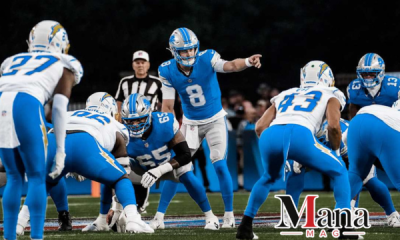
The Los Angeles Chargers defeated the Detroit Lions 34-7 in the 2025 NFL Hall of Fame Game on July 31, 2025, at Tom Benson Hall of Fame Stadium in Canton, Ohio. The Chargers controlled the game from the opening quarter, while Detroit struggled with turnovers and failed to produce a touchdown after halftime.
For anyone checking the Los Angeles Chargers vs Detroit Lions match player stats, Trey Lance stands out as the leading passer. He completed 13 of 20 attempts for 120 yards and two touchdowns without an interception. Kimani Vidal added two rushing touchdowns, while KeAndre Lambert-Smith caught two passes for 43 yards and a touchdown.
The bigger story sits in the turnover numbers. Los Angeles intercepted Detroit quarterbacks three times and lost no fumbles. Detroit threw three interceptions and lost two fumbles. That difference helped turn a competitive preseason evaluation into a 27-point Chargers win.
Game Summary: Chargers 34, Lions 7
The Chargers scored 14 points in the first quarter and added another seven before halftime. Detroit’s only touchdown came from Craig Reynolds in the second quarter.
Los Angeles then added six points in the third quarter through two Cameron Dicker field goals before Vidal scored again in the fourth quarter.
| Team | Q1 | Q2 | Q3 | Q4 | Final |
| Los Angeles Chargers | 14 | 7 | 6 | 7 | 34 |
| Detroit Lions | 0 | 7 | 0 | 0 | 7 |
The Chargers finished with 261 total yards compared with 197 for Detroit. Los Angeles also converted 4 of 13 third downs, while Detroit managed only 1 of 11.
Los Angeles Chargers Player Stats
The Chargers received useful performances across the offense. Trey Lance handled most of the quarterback work, while several running backs received carries.
Trey Lance Passing Stats
Trey Lance delivered the strongest quarterback performance of the game.
| Stat | Trey Lance |
| Completions | 13 |
| Attempts | 20 |
| Completion Rate | 65.0% |
| Passing Yards | 120 |
| Passing TDs | 2 |
| Interceptions | 0 |
| Sacks | 1 |
| Passer Rating | 114.6 |
Lance’s two touchdown passes went to Will Dissly and KeAndre Lambert-Smith. The first came on a five-yard touchdown pass in the opening quarter. The second was a 15-yard scoring connection with Lambert-Smith in the second quarter.
He also spent a large portion of the game on the field, giving him more opportunities than several players who appeared later.
DJ Uiagalelei Passing Stats
DJ Uiagalelei took over later in the contest.
He completed 2 of 3 passes for 25 yards. He did not throw a touchdown or interception and finished with a 92.4 passer rating. The small sample makes direct comparisons with Lance difficult, but Uiagalelei avoided mistakes during his limited action.
Chargers Rushing Leaders
Kimani Vidal produced the biggest scoring impact on the ground.
| Player | Carries | Yards | Avg. | TD | Long |
| Kimani Vidal | 9 | 37 | 4.1 | 2 | 16 |
| Nyheim Hines | 8 | 34 | 4.3 | 0 | 9 |
| Hassan Haskins | 6 | 34 | 5.7 | 0 | 11 |
| Omarion Hampton | 2 | 9 | 4.5 | 0 | 8 |
| Trey Lance | 3 | 8 | 2.7 | 0 | 5 |
Vidal’s 37 rushing yards were not the highest total among Chargers backs, but his two touchdowns made his night stand out. Both scores came on short runs.
Hassan Haskins averaged 5.7 yards per carry, the best average among the Chargers backs with multiple carries. Nyheim Hines also produced 34 yards on eight attempts.
As a team, Los Angeles ran 35 times for 121 yards and two touchdowns.
Omarion Hampton’s Limited Workload
Omarion Hampton received only two rushing attempts and finished with nine yards. The small workload makes the stat line difficult to use as a measure of his overall ability.
The preseason often gives coaches a reason to spread carries across several players. A player with two carries can have little statistical volume even when receiving attention during the game.
Chargers Receiving Stats
KeAndre Lambert-Smith produced the biggest receiving play for Los Angeles.
| Player | Receptions | Yards | Avg. | TD |
| KeAndre Lambert-Smith | 2 | 43 | 21.5 | 1 |
| Tucker Fisk | 1 | 19 | 19.0 | 0 |
| Jaret Patterson | 2 | 18 | 9.0 | 0 |
| Will Dissly | 2 | 14 | 7.0 | 1 |
| Brenden Rice | 1 | 13 | 13.0 | 0 |
Lambert-Smith averaged 21.5 yards per catch and scored on a 15-yard touchdown reception from Lance.
Will Dissly also found the end zone. His touchdown gave the Chargers an early 7-0 lead.
The Chargers finished with 15 receptions for 145 receiving yards and two receiving touchdowns.
Detroit Lions Player Stats
Detroit’s offensive numbers show why the Lions struggled to keep pace.
Kyle Allen and Hendon Hooker shared quarterback duties. Neither threw a touchdown, and the two combined for three interceptions.
Kyle Allen Passing Stats
Kyle Allen completed 9 of 14 passes for 91 yards. He threw two interceptions and finished with a 43.2 passer rating.
| Stat | Kyle Allen |
| Completions | 9 |
| Attempts | 14 |
| Passing Yards | 91 |
| Touchdowns | 0 |
| Interceptions | 2 |
| Passer Rating | 43.2 |
The completion rate was 64.3 percent, but the interceptions had a much larger effect on his overall performance.
This is a good example of why completion percentage should not be viewed on its own. Nine completions on 14 attempts looks reasonable until the two interceptions are added to the picture.
Hendon Hooker Passing Stats
Hooker completed 3 of 6 passes for 18 yards.
He threw one interception and was sacked twice. His passer rating was 16.7.
Detroit’s quarterbacks combined for 12 completions on 20 attempts, 104 yards, zero passing touchdowns and three interceptions.
Lions Rushing Leaders
Craig Reynolds led Detroit’s rushing attack and scored the team’s only touchdown.
| Player | Carries | Yards | Avg. | TD | Long |
| Craig Reynolds | 10 | 38 | 3.8 | 1 | 13 |
| Jabari Small | 11 | 35 | 3.2 | 0 | 6 |
| Hendon Hooker | 3 | 9 | 3.0 | 0 | 4 |
| Kyle Allen | 2 | 5 | 2.5 | 0 | 3 |
Reynolds scored on a three-yard run in the second quarter. That gave Detroit its only points of the night.
Jabari Small actually received one more rushing attempt than Reynolds, but Reynolds finished with the higher yardage total.
Detroit finished with 93 rushing yards on 28 attempts, an average of 3.3 yards per carry.
Lions Receiving Leaders
Isaac TeSlaa led Detroit in receiving yards.
| Player | Receptions | Yards | Avg. | TD |
| Isaac TeSlaa | 2 | 46 | 23.0 | 0 |
| Dominic Lovett | 5 | 31 | 6.2 | 0 |
| Craig Reynolds | 1 | 10 | 10.0 | 0 |
TeSlaa’s 46 yards came on only two receptions. His 23.0 yards per catch was the highest average among Detroit players listed in the main receiving group.
Dominic Lovett led the Lions with five receptions and finished with 31 yards.
Detroit recorded 12 receptions for 109 receiving yards and no passing touchdowns.
The Turnover Battle Decided the Game
The clearest difference in the Chargers vs Lions match player stats was ball security.
Los Angeles threw no interceptions. Detroit threw three.
The Chargers also avoided losing a fumble, while Detroit lost two.
| Turnover Category | Chargers | Lions |
| Interceptions thrown | 0 | 3 |
| Lost fumbles | 0 | 2 |
| Defensive interceptions | 3 | 0 |
The Chargers defense recorded three interceptions. Nikko Reed, Myles Purchase and Tony Jefferson each picked off a Detroit pass.
NFL coverage also reported that Los Angeles forced five total takeaways during the game.
For a preseason game, those numbers matter because coaches are watching how players respond to live-game pressure. A turnover can change the score, but it can also affect how a coaching staff views a player’s reliability.
Chargers Defense vs Lions Offense
Los Angeles held Detroit to 197 total yards.
The Lions produced 104 passing yards and 93 rushing yards. They also converted only one of 11 third-down opportunities.
The Chargers defense recorded:
- 3 interceptions
- 2 sacks
- 5 passes defended
- 3 tackles for loss
- 59 total tackles
- 108 interception return yards
The three interceptions were the headline defensive statistic.
Tony Jefferson’s interception was especially notable. NFL coverage described how he read Kyle Allen’s attempt toward rookie receiver Isaac TeSlaa and made the play in the first quarter.
Detroit Defense: More Tackles, Less Impact
Detroit recorded 67 total tackles, more than Los Angeles.
That number alone does not mean the Lions defense played better. A defense can record many tackles because the opposing offense is completing plays and moving the ball.
Detroit finished with one sack, five tackles for loss, one pass defended and no interceptions according to the game statistics summarized by the source material.
The more useful comparison is what happened after defensive stops and mistakes. Los Angeles repeatedly created turnovers, while Detroit did not generate a takeaway.
Special Teams and Kicking Stats
Cameron Dicker played a major role in the scoring.
He made two field goals and all four extra-point attempts. His field goals came from 23 and 27 yards. He finished with 10 points.
Jake Bates handled Detroit’s kicking duties and made his only extra-point attempt.
The Chargers also had a strong punting performance from JK Scott, who averaged 51.3 yards across three punts. Detroit’s Jack Fox averaged 46.8 yards on four punts.
Chargers vs Lions Team Stats at a Glance
| Category | Chargers | Lions |
| Final score | 34 | 7 |
| Total yards | 261 | 197 |
| Passing yards | 140 | 104 |
| Rushing yards | 121 | 93 |
| Passing TDs | 2 | 0 |
| Rushing TDs | 2 | 1 |
| Interceptions thrown | 0 | 3 |
| Lost fumbles | 0 | 2 |
| Sacks | 2 | 1 |
| Third-down conversion | 4/13 | 1/11 |
| Time of possession | 32:13 | 27:47 |
The Chargers held the edge in total yardage, passing, rushing, scoring and turnover control.
What the Player Stats Tell Us
The box score gives a clear picture of how the game developed.
Trey Lance Was the Main Passing Story
Lance completed 65 percent of his passes and produced two touchdowns without an interception. His 114.6 passer rating was the best quarterback rating in the game.
That made him one of the clearest individual winners from the Chargers side.
Kimani Vidal Finished Drives
Vidal carried nine times for 37 yards and scored twice.
His overall yardage was modest, but touchdowns matter when judging a player’s contribution to the final score. He turned short-yardage chances near the goal line into points.
Detroit Had Some Productive Individual Numbers
Not every Lions stat was poor.
TeSlaa averaged 23 yards per reception. Reynolds scored the team’s only touchdown. Lovett caught five passes.
The problem was the lack of consistency across the offense. Detroit’s quarterbacks produced no passing touchdowns and three interceptions.
Defense Created the Biggest Separation
The Chargers did not win because of one enormous offensive yardage advantage. They won because the defense created extra possessions and the offense converted those opportunities into points.
That combination produced the 34-7 final score.
Why Preseason Stats Need Extra Context
The 2025 Hall of Fame Game was a preseason contest, so the numbers need to be read differently from regular-season statistics.
Coaches use preseason games to evaluate players throughout the roster. Playing time is split among quarterbacks, running backs, receivers, defensive players and special teams contributors.
That creates two important limitations.
First, a player might receive only a few opportunities. A receiver with two catches does not have the same statistical sample as a starter who receives eight or ten targets.
Second, a strong preseason performance does not automatically predict regular-season production.
Lance’s 120 passing yards and two touchdowns were excellent for the game. Vidal’s two touchdowns were also useful. But each performance should be viewed within the context of the players’ roles, opponents, playing time and later games.
NFL coverage noted that the Chargers gave Lance three quarters to make his case, while many players on both teams were competing for roster and depth roles.
Who Were the Top Statistical Performers?
Based on the game numbers, several players stood out.
Best Chargers Quarterback: Trey Lance
13 completions on 20 attempts, 120 yards, two touchdowns and zero interceptions.
Best Chargers Running Back: Kimani Vidal
Nine carries, 37 yards and two touchdowns.
Best Chargers Receiver: KeAndre Lambert-Smith
Two catches, 43 yards and one touchdown.
Best Lions Quarterback: Kyle Allen
Allen led Detroit in passing yards with 91, although two interceptions hurt his overall performance.
Best Lions Runner: Craig Reynolds
Reynolds posted 38 rushing yards and scored Detroit’s only touchdown.
Best Lions Receiver: Isaac TeSlaa
TeSlaa led Detroit with 46 receiving yards on two catches.
Final Takeaway
The Los Angeles Chargers vs Detroit Lions match player stats from the 2025 Hall of Fame Game show a 34-7 Chargers victory built around efficient quarterback play, rushing touchdowns, defensive takeaways and better ball security.
Trey Lance completed 13 of 20 passes for 120 yards and two touchdowns. Kimani Vidal scored twice on the ground. KeAndre Lambert-Smith added a receiving touchdown. On defense, Los Angeles intercepted Detroit three times and forced five total takeaways.
Detroit had individual contributions from Craig Reynolds, Isaac TeSlaa and Dominic Lovett, but the offense could not sustain drives. Three interceptions, two lost fumbles and only one successful third-down conversion made the gap too large to overcome.
For readers checking the Detroit Lions vs Los Angeles Chargers match player stats, the main lesson is simple. The box score shows more than the final score. The quarterback efficiency, rushing production, receiving efficiency and turnover numbers explain why Los Angeles controlled the game.
FAQ
Who won the Los Angeles Chargers vs Detroit Lions game?
The Los Angeles Chargers defeated the Detroit Lions 34-7 in the 2025 Hall of Fame Game.
What were Trey Lance’s stats against the Lions?
Trey Lance completed 13 of 20 passes for 120 yards and two touchdowns. He threw no interceptions and finished with a 114.6 passer rating.
Who led the Chargers in rushing?
Kimani Vidal led the Chargers with 37 rushing yards on nine carries. He also scored two touchdowns.
Who was the Chargers’ leading receiver?
KeAndre Lambert-Smith led Los Angeles with 43 receiving yards. He caught two passes and scored one touchdown.
Who scored the Lions’ only touchdown?
Craig Reynolds scored Detroit’s only touchdown on a three-yard rushing play in the second quarter.
How many interceptions did the Chargers record?
The Chargers recorded three interceptions against Detroit quarterbacks.
How many turnovers did the Lions commit?
Detroit threw three interceptions and lost two fumbles, giving the Lions five turnovers in total.
What was the total yardage for each team?
Los Angeles finished with 261 total yards. Detroit recorded 197 total yards.
Was the Chargers vs Lions game a regular-season matchup?
No. The game was the 2025 NFL Hall of Fame Game and served as a preseason contest.
Why should preseason player stats be treated differently?
Preseason games give playing time to players across the roster, including backups and younger players. A small sample of snaps or touches can make individual statistics less representative than regular-season numbers.

Must See
-

Sports
/ 2 weeks agoLos Angeles Chargers vs Detroit Lions Match Player Stats: 2025 Hall of Fame Game
The Los Angeles Chargers defeated the Detroit Lions 34-7 in the 2025 NFL Hall...
By Mica -


Sports
/ 2 weeks agoPittsburgh Pirates vs Mets Match Player Stats: August 2026 Game Breakdown
The Pittsburgh Pirates and New York Mets produced two very different games during their...
By Mica -


Sports
/ 2 weeks agoGolden State Warriors vs Orlando Magic Match Player Stats, Box Score and Game Analysis
The Golden State Warriors beat the Orlando Magic 120-97 on December 22, 2025, at...
By Mica