
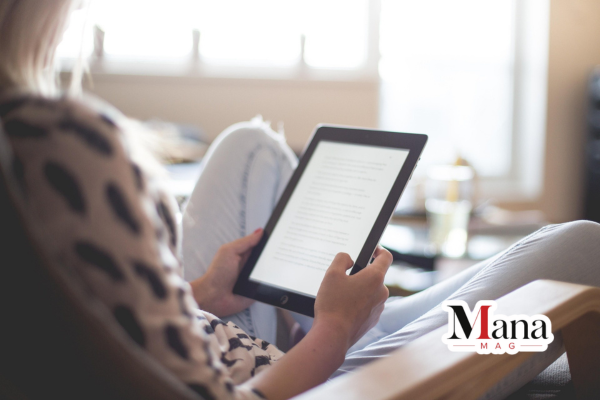
Free ebook search engines that promise millions of PDFs sound great until you actually think about where all those files came from. A huge share of what shows up on those “search millions of PDFs” sites is copyrighted material uploaded without the author’s or publisher’s permission, and using them puts you in a legal gray zone at best. The good news is that legitimate free ebooks are more available now than they’ve ever been, whether you’re after out-of-copyright classics, review copies from actual publishers, or full digital libraries you can borrow from with nothing but a library card.
This covers where that access actually lives, how each option works, and how to tell whether a book you found is genuinely free to download or just uploaded without permission.
Public Domain Libraries: Free and Completely Legal
Once a book’s copyright expires (in the US, this is typically 95 years after publication for older works, or the life of the author plus 70 years for newer ones), anyone can distribute or download it freely. A handful of sites specialize entirely in this category.
Project Gutenberg
The oldest digital library on this list, running since 1971, with a catalog focused on classic literature, historical texts, and older nonfiction. Everything here is confirmed public domain, so there’s no legal ambiguity at all. The tradeoff is obvious: you won’t find anything recent, since a book generally needs to be quite old before it qualifies.
Internet Archive
Beyond public domain texts, the Internet Archive also runs a Controlled Digital Lending program, letting you borrow scanned copies of many still-copyrighted books for a limited time, the digital equivalent of checking a physical copy out of a library. This expands what’s available well beyond pure public domain material, while staying within a licensing model publishers have generally accepted.
Standard Ebooks
A smaller but polished project that takes public domain texts and produces genuinely well-formatted, professionally typeset ebook editions, a real step up from the sometimes rough OCR scans you’ll find elsewhere.
Publisher and Author-Sanctioned Free Books
- Smashwords – An ebook distribution platform where independent authors set their own pricing, including permanently free titles they’ve chosen to release that way. Everything here is intentionally free by the author’s own decision.
- BookBub – Doesn’t host books directly, but sends daily alerts for free and heavily discounted ebooks that publishers and authors are actively promoting. A genuinely useful way to build a to-read list without the legal question mark.
- Author websites and email newsletters – A lot of authors, especially in genre fiction, give away a first book in a series or a novella to build their mailing list. This is intentional marketing, not a workaround.
Borrowing Through Your Library
This is the option most people skip, and it shouldn’t be.
Libby (run by OverDrive) and Hoopla both let you borrow ebooks digitally using nothing but your library card number. Libraries pay publishers for lending licenses on these titles the same way they do for physical books, so what’s available depends entirely on what your specific library system has purchased. Recent bestsellers, popular nonfiction, and huge back catalogs are often available this way, sometimes with a short wait list for high-demand titles, similar to a physical hold.
If you haven’t checked what your library card gives you access to digitally, it’s worth five minutes to find out. A lot of readers have no idea how much this covers until they actually look.
Academic and Research-Focused Free Resources
If you’re after textbooks or research material specifically:
- OpenStax – Free, peer-reviewed college textbooks across common subjects like biology, economics, and calculus, produced specifically to give students a legal free alternative to expensive commercial textbooks.
- Directory of Open Access Books (DOAB) – A curated index of academic ebooks that publishers and institutions have specifically made open access.
- Google Books – Not a download source in most cases, but useful for previewing significant portions of a book, sometimes enough to answer a specific question without needing the full text.
How to Tell If a “Free” Book Is Actually Legal
A few quick checks before downloading from any site you’re not sure about:
- Does the site explain where its files come from? Legitimate free-book sources are upfront about licensing, public domain status, or lending agreements. Vague language about “sharing knowledge” without addressing copyright is a signal to be cautious.
- Is the book recent and still commercially available? A current bestseller showing up as a free instant download on an unfamiliar site is a strong indicator it wasn’t uploaded with permission.
- Does downloading require installing something extra? A legitimate ebook download shouldn’t need a special reader, browser extension, or “download manager” to function. That pattern is a common way sketchy sites bundle in unwanted software.
- Does the site carry a lot of intrusive advertising or forced redirects? This isn’t proof of anything on its own, but it correlates strongly with sites that monetize through ad networks rather than any legitimate publishing relationship.
A Quick Comparison
| Source | Cost | Catalog Focus | Legal Status |
| Project Gutenberg | Free | Public domain classics | Fully legal |
| Internet Archive | Free (some titles borrowed) | Mixed, including controlled lending | Legal under lending model |
| Standard Ebooks | Free | Polished public domain editions | Fully legal |
| Smashwords | Free and paid | Independent/self-published | Fully legal, author-set pricing |
| Libby / Hoopla | Free with library card | Recent and backlist titles | Fully legal, publisher-licensed |
| OpenStax | Free | College textbooks | Fully legal |
Why This Actually Matters Beyond the Legal Question
Downloading from a site that hosts unauthorized copies doesn’t just carry legal risk. It means the author and publisher see nothing from that copy being read, which matters more than people tend to think about, especially for smaller or independent authors who rely on actual sales and library licensing revenue to keep writing. It’s also a genuine security concern: sites willing to distribute copyrighted material without permission often aren’t especially careful about what else ends up bundled into a download, and independent reviewers have flagged real safety concerns with some of the larger sites in this space.
Bottom Line
Between public domain libraries, author-sanctioned free titles, and what your library card already gives you access to, there’s a legitimate free path to an enormous amount of reading material. It just takes going to the right source instead of a search engine that doesn’t ask where its files came from.
FAQ
Is it illegal to download a book from a free PDF search site?
It depends entirely on the specific file. If the book is in the public domain or the author has released it for free, downloading is fine. If it’s a copyrighted book uploaded without authorization, downloading it is a copyright violation, even if the site itself claims no responsibility for what users upload.
How can I tell if a book is in the public domain?
In the US, works published before 1929 are generally in the public domain, and the cutoff moves forward each year. For anything published after that, public domain status depends on specific factors like the author’s death date and whether the copyright was renewed, so checking a source like Project Gutenberg (which only lists confirmed public domain works) is more reliable than guessing.
Does my library actually have a good ebook selection?
Often yes, and more than people expect. Libby and Hoopla give access to whatever ebooks your specific library system has licensed, which for many library systems includes recent bestsellers and large backlists. Availability varies by library, so it’s worth checking your own system directly.
Are free ebook search sites actually dangerous to use, or just legally questionable?
Both concerns apply to different sites. Beyond the copyright issue, some free ebook aggregators have been flagged by security researchers and antivirus tools for risky ad networks or bundled downloads. Sticking to known legitimate sources avoids both problems at once.
Can authors actually lose money when people download unauthorized copies of their books?
Yes, generally. Sales and library lending revenue are often a meaningful part of an author’s income, particularly for independent and mid-list authors who don’t have other major income streams. Using authorized free sources, including library lending, still supports that revenue model, since libraries pay for lending licenses even though the reader doesn’t pay directly.
What’s the fastest way to find free books in a specific genre?
BookBub’s daily deal alerts and Smashwords’ free-title filters are both organized by genre and updated constantly, making them faster for genre-specific browsing than a general public domain library, which skews toward older classics rather than current genre fiction.
Must See
-

Sports
/ 2 weeks agoLos Angeles Chargers vs Detroit Lions Match Player Stats: 2025 Hall of Fame Game
The Los Angeles Chargers defeated the Detroit Lions 34-7 in the 2025 NFL Hall...
By Mica -


Sports
/ 2 weeks agoPittsburgh Pirates vs Mets Match Player Stats: August 2026 Game Breakdown
The Pittsburgh Pirates and New York Mets produced two very different games during their...
By Mica -


Sports
/ 2 weeks agoGolden State Warriors vs Orlando Magic Match Player Stats, Box Score and Game Analysis
The Golden State Warriors beat the Orlando Magic 120-97 on December 22, 2025, at...
By Mica


