
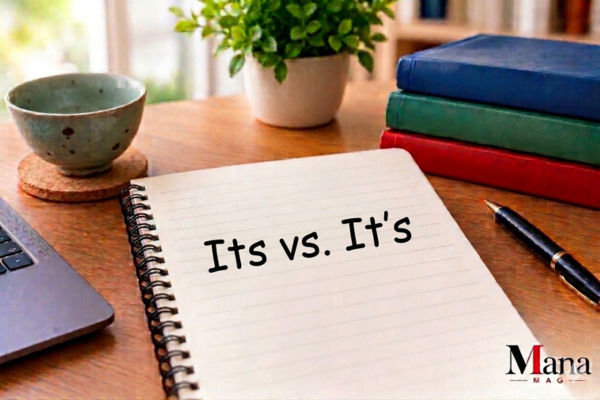
“Its” and “it’s” sound the same, but they do different jobs in a sentence. That small apostrophe changes the meaning and grammar of the word.
The easiest rule is this: “it’s” means “it is” or “it has.” “Its” shows possession or a connection to something previously mentioned. This distinction applies in school assignments, emails, reports, social media posts, and everyday writing.
Once you learn what the apostrophe actually represents, choosing between “its” and “it’s” becomes much easier.
The Quick Difference Between Its and It’s
Here is the rule to remember:
“It’s” = “it is” or “it has”
“Its” = belonging to it or associated with it
For example:
“It’s raining outside.”
This means:
“It is raining outside.”
Now look at this sentence:
“The dog wagged its tail.”
The tail belongs to the dog, so “its” is correct.
A simple replacement test works in most cases. Replace “it’s” with “it is” or “it has.” If the sentence still makes sense, keep the apostrophe. If the replacement sounds wrong, “its” is usually the right choice.
What Does “It’s” Mean?
“It’s” is a contraction. A contraction combines two words into a shorter form.
“It’s” has two possible meanings:
“It is”
“It has”
Examples:
“It’s a beautiful morning.”
Full form: “It is a beautiful morning.”
“It’s getting late.”
Full form: “It is getting late.”
“It’s been a busy week.”
Full form: “It has been a busy week.”
“It’s already finished.”
Full form: “It has already finished.”
The apostrophe shows that letters have been removed from the original phrase. This is the same basic idea behind contractions such as “don’t” for “do not” and “can’t” for “cannot.”
“It’s” Can Mean “It Is”
Use “it’s” when you could write “it is” instead.
For example:
“It’s difficult to explain.”
“It is difficult to explain.”
“It’s my favorite book.”
“It is my favorite book.”
“It’s cold today.”
“It is cold today.”
The shortened version often sounds more natural in casual writing and conversation.
“It’s” Can Mean “It Has”
“It’s” also works as a contraction of “it has.”
For example:
“It’s been three hours.”
“It has been three hours.”
“It’s already started.”
“It has already started.”
“It’s changed a lot.”
“It has changed a lot.”
This is where some writers hesitate because they remember only the “it is” rule. Remember that “it’s” can represent both “it is” and “it has.”
What Does “Its” Mean?
“Its” is the possessive form associated with “it.” It tells the reader that something belongs to, comes from, or is connected with a previously mentioned thing.
Examples:
“The cat cleaned its paws.”
“The company changed its logo.”
“The phone lost its signal.”
“The tree dropped its leaves.”
“The machine stopped its operation.”
In each example, “its” connects one thing with another.
The cat has paws.
The company has a logo.
The phone has a signal.
The tree has leaves.
There is no apostrophe in “its” when showing possession. Possessive forms such as “his,” “hers,” “ours,” and “theirs” also do not use apostrophes.
Why Does “Its” Not Have an Apostrophe?
This is one reason the pair causes so many mistakes.
English often uses an apostrophe to show possession:
“Sarah’s notebook”
“the teacher’s desk”
“the dog’s collar”
So it seems logical to write “it’s” when something belongs to “it.”
But “its” follows the possessive pronoun pattern. The possessive forms “his,” “hers,” “ours,” “yours,” “theirs,” and “its” do not use apostrophes.
Compare:
“The boy lost his bag.”
“The girl lost her bag.”
“The dog lost its collar.”
The apostrophe in “it’s” has a different job. It marks a contraction, not possession.
Its vs. It’s Examples
Seeing both forms side by side makes the difference easier to spot.
“It’s getting dark.”
Here, “it’s” means “it is.”
“The car lost its mirror.”
Here, “its” shows that the mirror belongs to the car.
“It’s been a difficult month.”
Here, “it’s” means “it has.”
“The company updated its website.”
Here, “its” shows a connection between the company and the website.
“It’s clear that we need more time.”
Here, “it’s” means “it is.”
“The computer has lost its connection.”
Here, “its” indicates possession or association.
A Simple Test for Choosing Its or It’s
When you are unsure, stop and expand the word.
Suppose you write:
“The phone has lost it’s signal.”
Ask whether “it is” works:
“The phone has lost it is signal.”
That sentence does not work.
So “it’s” is wrong.
The correct sentence is:
“The phone has lost its signal.”
Now try:
“___ getting late.”
Expand the word:
“It is getting late.”
That works, so the correct form is:
“It’s getting late.”
This test takes only a few seconds and works in most everyday situations.
Another Useful Trick: Look at What Comes After the Word
“Its” often appears directly before a noun.
Examples:
“its color”
“its name”
“its owner”
“its purpose”
“its price”
“its location”
“It’s” normally forms part of a clause containing “is” or “has.”
Examples:
“it’s ready”
“it’s raining”
“it’s difficult”
“it’s broken”
“it’s been repaired”
This pattern does not replace the expansion test, but it can help you spot an error quickly.
Common Mistakes With Its and It’s
Mistake 1: Using “It’s” to Show Possession
Incorrect:
“The dog wagged it’s tail.”
Correct:
“The dog wagged its tail.”
The tail belongs to the dog, so no apostrophe is needed.
Mistake 2: Forgetting the Apostrophe in “It’s”
Incorrect:
“Its going to rain.”
Correct:
“It’s going to rain.”
Here, “it’s” means “it is.”
Mistake 3: Writing “Its’”
“Its’” is not the standard possessive form.
Write:
“The company changed its policy.”
Not:
“The company changed its’ policy.”
Mistake 4: Assuming Every Apostrophe Means Possession
An apostrophe has several jobs in English. One of them is showing missing letters in contractions.
In “it’s,” the apostrophe belongs to the contraction.
In “Sarah’s,” the apostrophe marks possession.
That distinction helps explain why “its” does not need an apostrophe.
Why “Its” and “It’s” Are Easy to Confuse
The two forms are pronounced the same in ordinary English speech. When you hear someone say the word, you cannot tell which spelling they intend.
That means context matters.
Consider:
“The bird spread its wings.”
and
“It’s ready to fly.”
The sound of “its” and “it’s” does not tell you which spelling to write. You need to look at the role the word plays in the sentence.
Its vs. It’s in Formal Writing
The distinction matters most when you are writing something that another person will evaluate.
Pay attention to it in:
Academic assignments
Business emails
Reports
Resumes and cover letters
Website content
Professional documents
Job applications
A single mistake will not normally make a sentence impossible to understand, but repeated grammar errors can make writing look less polished.
In casual messages, people often type quickly and make spelling or punctuation mistakes. In formal writing, taking a moment to check “its” and “it’s” is worth the effort.
A Quick Comparison
| Word | Meaning | Main use | Example |
| its | belonging to it | Shows possession or association | The dog found its toy. |
| it’s | it is | Contraction | It’s very cold. |
| it’s | it has | Contraction | It’s been a long day. |
The key difference is simple. “Its” shows a relationship or possession. “It’s” replaces “it is” or “it has.”
Practice: Choose Its or It’s
Try these sentences before checking the answers.
- The company changed ___ name.
- ___ going to be a long journey.
- The cat chased ___ toy.
- ___ been raining since morning.
- The phone has lost ___ connection.
- I think ___ time to leave.
- The school updated ___ website.
- ___ already finished.
Answers
- its
- it’s
- its
- it’s
- its
- it’s
- its
- it’s
Try the expansion test on each “it’s” example. Then ask whether “its” describes something belonging to or associated with another thing.
A Fast Memory Rule
Remember these two lines:
Its = belongs to it.
It’s = it is or it has.
For example:
“The dog hurt its paw.”
The paw belongs to the dog.
“It’s hurt.”
“It is hurt.”
If you can expand “it’s” into “it is” or “it has,” use the apostrophe. If you are showing possession, use “its.”
Final Takeaway
The difference between “its” and “it’s” comes down to one question: what does the word mean in your sentence?
Use “its” when you mean belonging to or associated with something.
Use “it’s” when you mean “it is” or “it has.”
When you are unsure, expand “it’s.” If “it is” or “it has” fits naturally, the apostrophe belongs there. If the sentence describes possession, choose “its.”
Once this test becomes a habit, the difference becomes much easier to handle in emails, assignments, articles, and everyday writing.
FAQ
What is the difference between its and it’s?
“Its” shows possession or association. “It’s” is a contraction of “it is” or “it has.”
Is its a possessive word?
Yes. “Its” is the possessive form associated with the pronoun “it.” For example, “The company changed its policy.”
When should I use it’s?
Use “it’s” when you mean “it is” or “it has.”
Examples:
“It’s cold outside.”
“It’s been a long day.”
When should I use its?
Use “its” when something belongs to or is associated with another thing.
Example:
“The dog carried its toy.”
Is “its’” correct?
No. “Its’” is not the standard form. Use “its” for possession.
Can it’s mean it has?
Yes. “It’s” can mean either “it is” or “it has.”
“It’s been a great day” means “It has been a great day.”
How can I quickly remember its vs. it’s?
Use the expansion test. Replace “it’s” with “it is” or “it has.” If the sentence works, use “it’s.” If the sentence shows possession, use “its.”
Do its and it’s sound the same?
Yes. They normally have the same pronunciation, so you need to use the sentence context to choose the correct spelling.

Must See
-

Sports
/ 2 weeks agoLos Angeles Chargers vs Detroit Lions Match Player Stats: 2025 Hall of Fame Game
The Los Angeles Chargers defeated the Detroit Lions 34-7 in the 2025 NFL Hall...
By Mica -


Sports
/ 2 weeks agoPittsburgh Pirates vs Mets Match Player Stats: August 2026 Game Breakdown
The Pittsburgh Pirates and New York Mets produced two very different games during their...
By Mica -


Sports
/ 2 weeks agoGolden State Warriors vs Orlando Magic Match Player Stats, Box Score and Game Analysis
The Golden State Warriors beat the Orlando Magic 120-97 on December 22, 2025, at...
By Mica


