What a Back Casting Room Actually Is
Before getting into the “room” part, it helps to understand the method behind it, because that’s where the real value sits.
Backcasting is a planning approach where you start at the finish line instead of the starting block. You picture a specific future state, say, a company that runs on 100% renewable energy by 2035, or a city with zero traffic fatalities by 2040, and then you work backward, year by year, to figure out what has to happen today to make that future real. It’s the opposite of forecasting, which takes today’s numbers and trends and projects them forward.
The method was formally developed in the 1970s and 1980s, mostly in energy policy and environmental planning, by researchers like John B. Robinson, who used it to study long-term energy futures without being boxed in by current infrastructure limits. Since then it’s been picked up by urban planners, sustainability teams, product strategists, and corporate leadership groups who need to solve problems that can’t be fixed with small, incremental steps.
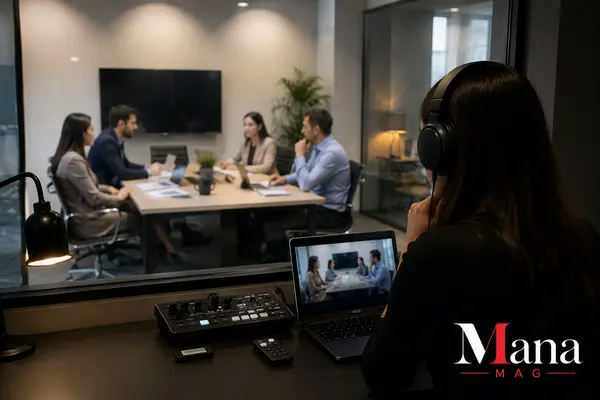
A back casting room, in practical terms, is simply the dedicated space (physical or virtual) where a team runs this exercise. There’s nothing mystical about the term. It’s descriptive, similar to how people talk about a “war room” for crisis management or a “situation room” for decision-making. Worth being upfront about: you won’t find “back casting room” as a formally defined term in academic planning literature or business dictionaries. Backcasting itself is well documented and credible. The room is just the practical container teams use to do the work, and different organizations set theirs up differently. Some call it a strategy room, an innovation lab, or simply “the backcasting session.” The label matters less than what happens inside it.
Backcasting vs. Forecasting: The Core Difference
| Forecasting | Backcasting | |
| Starting point | Present-day data and trends | A defined future goal |
| Direction of thinking | Forward, from now to later | Backward, from later to now |
| Best suited for | Short-to-medium term, predictable environments | Long-term, complex, or transformational goals |
| Main risk | Assumes the future looks like an extension of today | Requires discipline to stay grounded in reality |
| Typical output | A projection or trend line | A roadmap with reverse milestones |
Forecasting answers “where are we probably headed?” Backcasting answers “where do we need to end up, and what has to give way to get us there?” Neither one is universally better. Forecasting works well for quarterly sales targets or inventory planning, where the near future genuinely does resemble the recent past. Backcasting earns its keep when you’re dealing with a goal that current trends won’t get you to on their own, like decarbonizing an entire supply chain, or redesigning a city’s transit system from scratch.
Why Organizations Set Up a Dedicated Space for This
You could technically do backcasting on a shared document with people in five different time zones. Plenty of teams do exactly that. But there are practical reasons a physical or virtual room helps:
- It removes the “we can’t afford that” reflex. When people are sitting in their normal workspace, current budgets and constraints creep into every idea before it’s even written down. A separate space, even a virtual one with its own agenda, signals that this session runs on different rules.
- Visual thinking works better on a wall than in a spreadsheet. Backcasting usually involves mapping a timeline with milestones, dependencies, and decision points. A whiteboard, a large digital canvas (Miro, Mural, FigJam), or even sticky notes on a physical wall make it much easier to see the whole path at once instead of scrolling through a document.
- It keeps the group’s attention on one horizon at a time. Jumping between “what’s due this week” and “what does 2040 look like” in the same meeting rarely produces good thinking on either front. A dedicated session protects the long-range conversation from getting hijacked by short-term fire drills.
- It creates a record. Photographing a wall of sticky notes, or exporting a digital board, gives you an artifact you can revisit six months later when someone asks, “wait, why did we decide to prioritize this milestone?”
None of this requires a special room in the architectural sense. What it requires is a set structure, dedicated time, and the right tools, whether that’s four walls or a shared Miro board.
What Typically Happens During a Backcasting Session
Most sessions, regardless of industry, follow a similar arc:
- Define the target future. Get specific. “Be more sustainable” isn’t a target; “cut Scope 1 and 2 emissions by 90% by 2032” is. Vague goals produce vague roadmaps.
- Check the future state against reality. Is it ambitious but achievable, or pure fantasy? This step keeps backcasting from turning into wishful thinking.
- Work backward in stages. Break the timeline into checkpoints, five years out, three years out, one year out, and ask at each stage: what needs to be true by this point for the final goal to still be on track?
- Identify the barriers. At each checkpoint, name what’s currently stopping you from being there already. Budget, technology, regulation, skills gaps, whatever it is.
- Convert barriers into action items. Each barrier becomes a task assigned to a team or person, with a deadline that lines up with the checkpoint it supports.
- Build the forward roadmap. Once the backward mapping is done, flip it around. You now have a chronological plan from today toward the target, built with the end already in mind rather than guessed at along the way.
A facilitator matters here more than people expect. Someone needs to keep the group from sliding back into forecasting habits, catching phrases like “well, based on our current budget” and redirecting the conversation back to the future state.
Where Backcasting Gets Used
Sustainability and climate planning. This is where the method has the deepest track record. Governments and utility companies use it to plan energy transitions, since jumping straight from today’s grid to a fully renewable one requires working out intermediate steps that forecasting alone won’t reveal.
Urban and transit planning. Cities aiming for goals like car-free downtown cores or zero-emission public transit fleets use backcasting to sequence infrastructure investment, because the end state usually requires changes that don’t make sense if you only look one budget cycle ahead.
Corporate strategy. A company setting a 10-year market position goal, entering a new industry, or restructuring around a completely different business model, will often use backcasting to avoid getting stuck optimizing the current business instead of building the next one.
Product and technology roadmaps. Teams building toward a technology that doesn’t fully exist yet (autonomous vehicles, next-generation batteries, new medical devices) use backcasting because forecasting from current capability tends to underestimate what’s actually possible.
Strengths and Limitations
What backcasting does well:
- Forces long-term thinking instead of incremental patching
- Surfaces barriers early, while there’s still time to plan around them
- Aligns cross-functional teams around one shared endpoint
- Works especially well for sustainability, infrastructure, and transformation goals
Where it falls short:
- It’s only as good as the target you set. An unrealistic future state produces an unrealistic roadmap.
- It takes more facilitation skill than a standard planning meeting. Groups default back to forecasting habits without someone actively steering.
- It can undersell near-term risks. Because the focus is the destination, teams sometimes miss immediate operational problems that need attention right now.
- It’s not a good fit for short-term, highly predictable planning, like next month’s staffing schedule, where forecasting is faster and just as accurate.
Setting Up Your Own Backcasting Session
If you’re building this from scratch, a few practical choices make a real difference:
- Pick a facilitator who isn’t emotionally attached to the current way of doing things. Someone too close to existing processes will unconsciously pull the conversation back toward “what’s realistic today.”
- Time-box each stage. Give the group 15 to 20 minutes per checkpoint. Open-ended discussion tends to drift back into forecasting.
- Use a shared visual tool, whether that’s a physical wall or a digital whiteboard, so everyone sees the same timeline at the same time.
- Assign an owner to every barrier you identify. A barrier with no owner just becomes a note nobody acts on.
- Revisit the roadmap on a schedule. Quarterly or biannual check-ins keep the plan honest as circumstances change.
The Bottom Line
Backcasting is a genuinely useful planning method with decades of use behind it, particularly for goals that current trends can’t get you to on their own. Whether you call the place you do it a “back casting room,” a strategy lab, or just a recurring meeting on the calendar, what actually matters is the discipline of the process: a clear future target, honest backward mapping, and a plan that turns big goals into steps someone is actually responsible for.
FAQ
Is “back casting room” an official business or planning term?
Not formally. Backcasting itself is a well-documented planning method, but there’s no standardized definition of a “back casting room” in academic or business literature. It’s best understood as a descriptive, practical label for the space or session where a team runs a backcasting exercise, similar to how “war room” describes a crisis-response setup rather than a formally defined role or facility.
How is backcasting different from scenario planning?
Scenario planning explores several possible futures to prepare for uncertainty. Backcasting picks one specific, desired future and maps the concrete path to reach it. They’re often used together: scenario planning to choose a direction, backcasting to build the roadmap toward it.
Do you need special software or a physical room to do backcasting?
No. A whiteboard, sticky notes, or a digital tool like Miro or FigJam works fine. What matters more is structure: a clearly defined future target, a facilitator, and time set aside specifically for backward mapping instead of day-to-day planning.
How far into the future should a backcasting target be set?
It depends on the goal. Sustainability and infrastructure targets often run 10 to 30 years out. Corporate strategy goals are often 5 to 10 years. The key is picking a horizon far enough out that current constraints genuinely don’t apply yet, which is what makes backcasting different from ordinary planning.
Who should be in the room during a backcasting session?
A mix of people who understand the current operational reality and people who can think past it, typically leadership, subject matter experts, and someone with facilitation experience. Too many people focused only on short-term constraints can pull the whole session back into forecasting mode.
Can backcasting be used for personal or small-team goals, not just large organizations?
Yes. The method scales down fine. Anyone working toward a long-term goal, career change, business launch, major life transition, can use the same backward-mapping process on a much smaller scale.

Must See
-

Sports
/ 2 weeks agoLos Angeles Chargers vs Detroit Lions Match Player Stats: 2025 Hall of Fame Game
The Los Angeles Chargers defeated the Detroit Lions 34-7 in the 2025 NFL Hall...
By Mica -


Sports
/ 2 weeks agoPittsburgh Pirates vs Mets Match Player Stats: August 2026 Game Breakdown
The Pittsburgh Pirates and New York Mets produced two very different games during their...
By Mica -


Sports
/ 2 weeks agoGolden State Warriors vs Orlando Magic Match Player Stats, Box Score and Game Analysis
The Golden State Warriors beat the Orlando Magic 120-97 on December 22, 2025, at...
By Mica