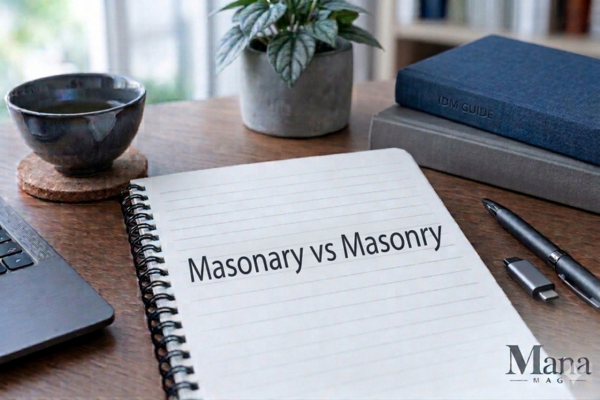
If you are searching for the correct “mason spelling,” the answer is simple: “masonry” is the correct spelling. “Masonary” is a common misspelling.
Masonry refers to the craft of building with materials such as brick and stone. The word can also describe the brickwork, stonework, or other construction produced by a mason. Major English dictionaries, including Merriam-Webster, Oxford, and Cambridge, list “masonry” as the standard English word.
The extra “a” in “masonary” is easy to add because of how the word sounds when spoken. If you are writing a construction report, school assignment, job description, website, or business document, use “masonry.”
Masonary vs Masonry: The Quick Answer
“Masonry” is correct.
“Masonary” is incorrect in standard English and is generally treated as a misspelling of “masonry.”
Here is the difference:
| Spelling | Correct? | Meaning |
| Masonry | Yes | Brickwork, stonework, or the craft of a mason |
| Masonary | No | Common misspelling of masonry |
Correct:
“The house has a brick masonry wall.”
Incorrect:
“The house has a brick masonary wall.”
The safest rule is simple: write “masonry,” not “masonary.”
What Does Masonry Mean?
Masonry is a noun connected with construction using materials such as bricks, stones, and concrete masonry units. Depending on the context, the word can refer to the work itself, the craft, or the finished construction. Merriam-Webster defines masonry in terms of structures made from materials used by masons, as well as the trade and work of a mason.
For example:
“The contractor repaired the damaged masonry.”
“She studied masonry as part of her construction training.”
“The building has traditional stone masonry.”
Cambridge also defines masonry as bricks or pieces of stone used to make a building and as the skill of building with brick and stone.
So, depending on the sentence, “masonry” can describe both a construction method and the resulting material or structure.
Why Is “Masonary” a Common Mistake?
The mistake comes from the way “masonry” sounds.
The standard pronunciation is roughly:
MAY-suhn-ree
The middle part is relatively weak in normal speech. Because the word begins with “mason,” some people instinctively insert an extra “a” before the final sound and write “masonary.”
That produces:
Mason + ary = masonary
But the standard spelling is:
Mason + ry = masonry
The extra “a” does not belong in the word.
This is similar to many English spelling mistakes where pronunciation does not give a clear picture of every letter in the written form.
How Do You Spell Mason Correctly?
The word “mason” is spelled:
M-A-S-O-N
A mason is a skilled worker who builds or works with materials such as brick and stone. Cambridge describes a mason as someone trained to work with bricks and stones used in buildings.
Examples:
“The mason repaired the brick wall.”
“We hired a mason to restore the stone steps.”
“The mason carefully replaced the damaged bricks.”
The word “masonry” is related to “mason,” but the two words have different meanings.
Mason vs Masonry
It helps to separate the person from the work.
Mason
A mason is the person who performs the work.
Example:
“The mason built the stone wall.”
Masonry
Masonry refers to the craft, work, or construction associated with a mason.
Example:
“The stone masonry looks excellent.”
Think of the relationship this way:
Mason = worker
Masonry = craft or construction
This distinction also helps explain why “masonary” looks tempting. People often expect the longer noun to follow a simple pattern based on the shorter word. English spelling does not always work that way.
How Is Masonry Used in Construction?
“Masonry” appears frequently in construction terminology.
Common examples include:
masonry wall
masonry construction
masonry contractor
masonry work
masonry repair
masonry building
masonry units
stone masonry
brick masonry
concrete masonry
For example:
“The engineer inspected the masonry wall.”
“The project requires a qualified masonry contractor.”
“The old masonry needs repair.”
These phrases all use “masonry,” never “masonary.”
Masonry in a Sentence
Here are some examples showing how the correct spelling works in everyday and professional writing.
Example 1
“The workers repaired the damaged masonry.”
Here, masonry refers to the existing construction.
Example 2
“Brick masonry is common in residential construction.”
Here, masonry refers to a type of construction using brick.
Example 3
“The company specializes in masonry restoration.”
Here, masonry describes the type of restoration work.
Example 4
“The historic building has decorative stone masonry.”
Here, masonry refers to the stonework forming part of the building.
Example 5
“He learned masonry from an experienced builder.”
Here, masonry refers to the craft or trade.
Is “Masonry” a Noun?
Yes. “Masonry” is primarily a noun.
Oxford lists masonry as an uncountable noun and gives meanings related to stone construction and the work of building with stone.
Examples:
“Masonry requires practical skill.”
“The masonry was damaged.”
“They specialize in masonry.”
Because “masonry” is generally uncountable when referring to the craft or material as a whole, phrases such as “masonry work” and “masonry construction” are common.
Is “Masonry” the Same as Brickwork?
Not exactly.
Masonry is a broader term. It can include construction using brick, stone, concrete blocks, and similar units.
Brickwork specifically refers to work made from bricks.
For example:
“The building contains brick masonry.”
This tells you that brick is the masonry material.
“Stone masonry”
refers to masonry made with stone.
“Concrete masonry”
refers to construction using concrete masonry units or related concrete products.
The exact material depends on the context.
Is “Masonary” Ever the Correct Spelling?
For standard English writing, use “masonry.”
“Masonary” is generally identified as a misspelling rather than a separate English construction term.
You might still see “masonary” online, in user-generated text, search queries, or documents containing spelling errors. Seeing the spelling frequently does not make it the standard form.
If you are editing a document, replace “masonary” with “masonry.”
Masonry vs Masonary in Professional Writing
Spelling matters more when the word appears in professional documents.
Use “masonry” in:
Construction proposals
Building specifications
Engineering documents
Business websites
Job descriptions
Invoices
Academic assignments
Reports
Emails
Resumes and CVs
For example, a company might describe its services as:
“Commercial masonry services”
“Brick masonry repair”
“Stone masonry restoration”
“Masonry wall construction”
Using “masonary” in these contexts creates a spelling error that is easy to avoid.
Common Words That Use Masonry
Learning a few common combinations can make the spelling easier to remember.
Masonry Wall
A wall constructed using masonry materials.
Example:
“The contractor inspected the masonry wall for damage.”
Masonry Construction
Construction involving masonry materials and techniques.
Example:
“The project uses masonry construction for several exterior walls.”
Masonry Contractor
A contractor specializing in masonry work.
Example:
“We contacted a masonry contractor for the repair.”
Masonry Work
Work involving brick, stone, blocks, or related masonry materials.
Example:
“The building needs extensive masonry work.”
Masonry Repair
Repair work performed on masonry structures or components.
Example:
“The masonry repair should be completed before winter.”
In every case, the spelling remains “masonry.”
How to Remember the Correct Masonry Spelling
A simple memory trick is:
“A mason does masonry.”
Start with:
Mason
Then add:
ry
Together:
Masonry
Do not insert another “a.”
You can also remember the spelling visually:
MASON + RY = MASONRY
Not:
MASON + ARY = MASONARY
The shorter version is the correct one.
What Is the Origin of the Word Masonry?
“Masonry” has a long history in English. Oxford traces the word to Late Middle English and identifies French “maçonerie” as its source, related to “maçon,” meaning mason.
Dictionary.com similarly traces “masonry” to Middle English “masonerie,” from Middle French.
The word has therefore been connected with the work and craft of masons for centuries.
This history also explains why “masonry” is the established spelling rather than the modern-looking “masonary.”
Masonary vs Masonry: Common Examples
Here are some quick corrections.
Incorrect:
“The company provides masonary services.”
Correct:
“The company provides masonry services.”
Incorrect:
“The masonary wall has cracks.”
Correct:
“The masonry wall has cracks.”
Incorrect:
“He has experience in masonary work.”
Correct:
“He has experience in masonry work.”
Incorrect:
“We need a masonary contractor.”
Correct:
“We need a masonry contractor.”
Incorrect:
“The building has stone masonary.”
Correct:
“The building has stone masonry.”
Masonry vs Mason: Quick Comparison
| Word | Meaning | Example |
| Mason | A worker skilled in building or working with brick and stone | The mason repaired the wall. |
| Masonry | The craft, work, or construction associated with a mason | The masonry needs repair. |
| Masonary | Misspelling | Do not use this spelling in standard writing. |
The difference is easy once you connect the person with the work.
A mason performs masonry.
Does “Masonry” Have a Plural Form?
“Masonry” is normally used as an uncountable noun when referring to the craft, material, or general type of construction. Oxford marks the construction-related noun as uncountable.
For example:
“The masonry is damaged.”
“Masonry requires skilled workers.”
When discussing separate types or examples, writers can use phrases such as:
“types of masonry”
“masonry structures”
“masonry walls”
“masonry systems”
The plural “masonries” exists in dictionary usage, but it is uncommon in ordinary construction writing. Merriam-Webster lists “masonries” as the plural form.
A Quick Trick for Avoiding the Masonary Spelling
When typing the word, pause after “mason.”
Ask yourself:
What comes next?
The answer is “ry.”
Write:
Masonry
If you catch yourself typing:
Masonary
remove the extra “a.”
This small check can prevent the mistake in reports, emails, assignments, and construction documents.
Final Answer: Masonary or Masonry?
“Masonry” is the correct spelling.
“Masonary” is a common misspelling and should be avoided in standard English.
Masonry refers to the craft, work, or construction associated with materials such as brick and stone. A mason is the person who performs this type of work.
The easiest way to remember the spelling is:
MASON + RY = MASONRY
So if you are searching for the correct mason spelling, writing a construction document, or checking a sentence, choose “masonry.”
- FAQ
Is “masonary” a correct spelling?
No. “Masonary” is generally considered a misspelling. The correct spelling is “masonry.”
What is the correct spelling, masonary or masonry?
“Masonry” is correct. “Masonary” contains an extra “a” and should be corrected to “masonry.”
What does masonry mean?
Masonry refers to the craft, work, or construction involving materials such as brick, stone, and similar building units.
What is the difference between a mason and masonry?
A mason is the person who performs the work. Masonry refers to the craft, work, or construction produced by that work.
How do you pronounce masonry?
“Masonry” is commonly pronounced approximately as “MAY-suhn-ree.” Cambridge gives the pronunciation as /ˈmeɪ.sən.ri/.
Why do people spell masonry as masonary?
The extra “a” often appears because of the way “masonry” sounds when spoken. The unstressed middle sound can make “masonary” seem like a natural spelling.
Is masonry only used for brick buildings?
No. Masonry can refer to construction involving brick, stone, concrete masonry units, and related materials.
What is the easiest way to remember the spelling of masonry?
Remember:
“Mason does masonry.”
Or break the word into:
MASON + RY = MASONRY
Do not add an extra “a.”

Must See
-

Sports
/ 2 weeks agoLos Angeles Chargers vs Detroit Lions Match Player Stats: 2025 Hall of Fame Game
The Los Angeles Chargers defeated the Detroit Lions 34-7 in the 2025 NFL Hall...
By Mica -


Sports
/ 2 weeks agoPittsburgh Pirates vs Mets Match Player Stats: August 2026 Game Breakdown
The Pittsburgh Pirates and New York Mets produced two very different games during their...
By Mica -


Sports
/ 2 weeks agoGolden State Warriors vs Orlando Magic Match Player Stats, Box Score and Game Analysis
The Golden State Warriors beat the Orlando Magic 120-97 on December 22, 2025, at...
By Mica